
The 50-share NSE Nifty ended flat, up 5.80 points, or 0.06 per cent, at 10,308.95.

There will be tough periods in equity investing, but investors should not stop their SIP investments under any circumstance, advises Arnav Pandya.

Investment guru and mutual fund expert Ashok Kumar, answers all your MF related queries.

The Sensex has slid 18.5 per cent from its January 2015 peak.

Kotak Bank was the top laggard in the Sensex pack, shedding over 2 per cent, followed by ITC, PowerGrid, M&M, HDFC, Asian Paints and NTPC. On the other hand, Maruti rallied over 4 per cent. Bharti Airtel, Axis Bank, IndusInd Bank and Bajaj Finance were also among the gainers.
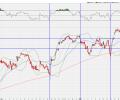
In India, however, the Nifty continues to climb a wall of worry as general elections loom, fiscal deficit surges and the current account deficit is barely under control following subdued gold and crude prices, says Sonali Ranade.

The NSE Nifty ended 89.40 points, or 0.83 per cent, lower at 10,710.45.

The broader markets were firm with mid-caps and small-caps gaining 1-1.4 per cent on the BSE.

The companies that have seen sharp erosion of market wealth include YES Bank, Indiabulls Housing Finance, Zee Entertainment, Vodafone Idea, and Bharat Heavy Electricals.
The retail frenzy over initial public offers (IPOs) seen over the past few months is not without reason. Over the past two years, 61 companies have tapped the primary market and raised funds via IPOs. Of these, 24 companies (nearly 39 per cent companies) have more than doubled at the bourses with Happiest Minds, IndiaMart Intermesh, Indian Railway Catering and Tourism Corporation (IRCTC), Affle India and Route Mobile surging 468 per cent to 722 per cent since their listing date till now. Retail participation in the equity market, according to analysts, has just reached an inflection point due to the low interest rate regime amid lack of investment-worthy avenues that can generate a good return for investors.

In the first six months of the year, the average number of deals a month stood at 1,264, against 1,484 in the six months ended December 2012

The upcoming corporate results season and the approaching Union Budget kept investors on their toes

Hopes of revival and earnings growth in 2020, surprise tax cuts, and robust foreign flows - thanks to easy global monetary policies - are a few reasons why the markets have managed to digest the low GDP footprint. Select bluechips such as Reliance Industries, Bajaj Finance, Asian Paints, and ICICI Bank have gained sharply this year. On the other hand, YES Bank, Zee Entertainment, and Indiabulls Housing have seen a sharp fall.

On Wednesday, FIIs sold shares worth Rs 1,573 crore.

The Nifty rose 176.50 points, or 1.74 per cent, during the week.

While analysts remains overweight on financials, property, discretionary, industrials and materials, they maintain a neutral stance on pharma, telecom and energy; and underweight on staples, utilities, and IT services.

Investors were anxious concerned about the uncertainties over the timing of Us Federal Reserve rate hike, US policies under President Donald Trump, the upcoming French election and rising crude price that could impact inflation, going ahead. A weak closing in Asia tracking overnight losses in the US owing to all these unknowns triggered selling, brokers said.

Fresh buying by domestic institutional investors and better-than-expected June quarter results from some blue-chip companies boosted investor sentiment
The 50-issue NSE Nifty in range-bound movements settled higher by 59.15 points, or 0.58 per cent, at 10,252.10.

The wider Nifty hit a low of 10,033.35 before finishing at 10,044.10, down 74.15 points or 0.73 per cent.

Among Sensex components, shares of Reliance Industries, India's largest company by market value, stole the show by surging 1.61 per cent to their highest in over three months.

The 30-share Sensex ended up 1 point at 27,459 and the 50-share Nifty ended down 1 point at 8,341.

Bombay Stock Exchange Sensex closed 30 points lower at 21,140 levels.

Bubbles can inflate indefinitely and also burst, with deep corrections, warns Devangshu Datta.

Sentiment continued to be weighed down by the government's move last week to withdraw high-value currency notes and disappointing quarterly earnings by some more blue-chip companies, brokers said.

Shares of RIL ended 2.4% higher as it pips TCS to become most valued firm

The BSE Sensex gained 104.63 points to end at 33,147.13, while the broader Nifty spurted 48.45 points to finish at 10,343.80.

Even if the bull run may continue, most experts say some profit booking is called for, points out Sanjay Kumar Singh.

The benchmark Sensex gained 4,642.84 points, or 16.%, while the broader NSE Nifty surged 1,572.85 points, or 18.20% during this period.

Investors booked profit ahead of the outcome of the two-day US Fed policy meet which begins today.

After disappointing guidances in the first quarter (Apr-Jun) of the 2023-24 financial year (Q1FY24) and valuation downgrades, the Indian IT sector could see some positive repricing as the bad news for IT maybe easing in Q2FY24. A key negative factor was weaker demand from the US financial sector and from North America in general. The latest GDP (gross domestic product) estimates and sector-specific news suggest that the demand situation may not be quite so bad with a gradual recovery in tech spending in Q2.

The broader Nifty ended on top of 9,800 again.

In the first eight months of 2019, 70 per cent stocks in the BSE 500 universe were down. These stocks account for 94 per cent of India's total market capitalisation.

To make money, invest in both good and bad times; otherwise the entire exercise is futile, experts tell Joydeep Ghosh & Sanjay Singh
The S&P BSE 500 index, which accounts for 94% market capitalisation of BSE listed companies, has gained 45% from its March 24 low. However, out of the BSE 500 index stocks, 225 have underperformed the index by gaining less than the broader index during this period.

The broader NSE Nifty rose nearly 124 points to settle just below the psychological 11,000 level.

You may invest even at current market levels provided you have an investment horizon of five years or more.

The 30-share barometer remained up throughout and hit a high of 29,070.20, powered by a rally in RIL and other blue-chips. The index ended 215.74 points up, or 0.75 per cent, at 29,048.19 -- its highest closing since March 5, 2015, when it had closed at 29,448.95.
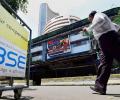
Of the 30-share Sensex pack, 22 ended with losses while NTPC ended flat at Rs 127.30.

'In the short term, we may see some disruptions due to Covid, but in the medium-to-long term, we should keep an eye on US inflation and 10-year bond yields.'
